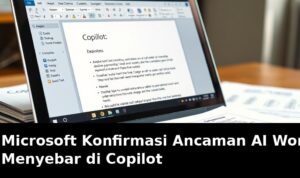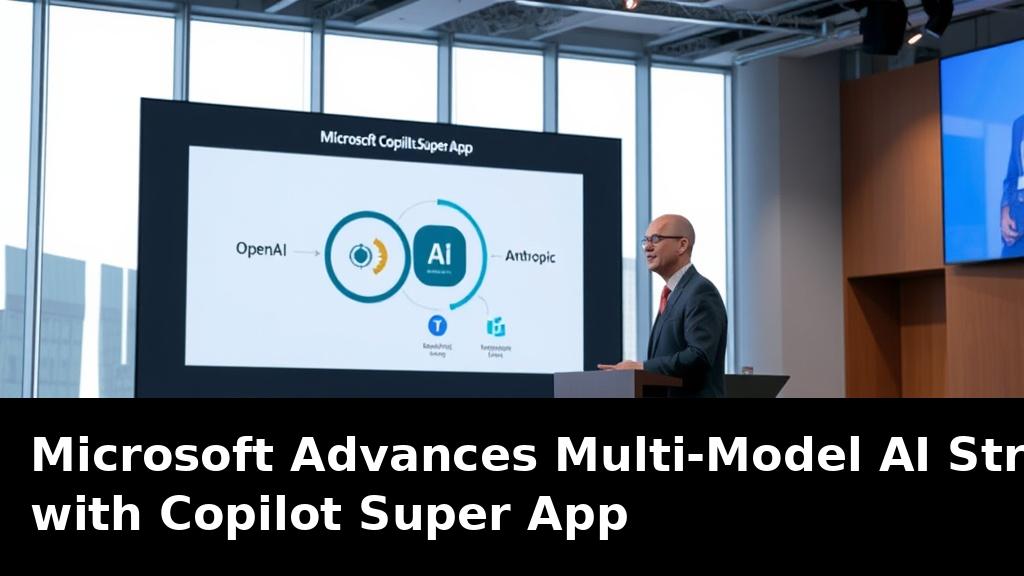
Microsoft is intensifying its focus on a multi-model artificial intelligence framework while developing a unified Copilot platform intended to serve as a central workspace for enterprise users. During the recent earnings call, Chief Executive Satya Nadella outlined plans to launch the Copilot super app within the current quarter, integrating chat functions, Cowork capabilities, long-running Autopilot agents, and the persistent Microsoft Scout powered by OpenClaw.
The platform will connect directly to existing governance tools such as Agent 365, IT Ops, SecOps, and FinOps, allowing CRM and ERP systems to function as modular skills and plug-ins. Nadella described this integration as enabling enterprise-wide workflows to operate within a single environment, representing a fundamental shift in how organizations structure daily operations.
This development positions Microsoft against competing offerings, including OpenAI’s ChatGPT Work and Claude Cowork. Current usage metrics indicate that everyday Copilot activity has reached parity with established Microsoft products such as Outlook and Teams, with paid seats now exceeding 30 million.
Beyond platform unification, Microsoft is responding to clear enterprise preference for model flexibility. Usage data shows a fivefold increase since the start of the year in customers deploying models from multiple providers. The company maintains one of the industry’s broadest catalogs, encompassing more than 11,000 models from OpenAI, Anthropic, Mistral, its own MAI family, and additional sources.
Nadella emphasized the creation of a system architecture in which harness, context, memory, and action layers remain independent of any single model family. This separation allows organizations to optimize the cost-to-outcome ratio while retaining control over internal knowledge assets. Enterprises can therefore evaluate providers based on measurable business results rather than surrendering proprietary data.
One notable implication of this architecture lies in regulated sectors, where compliance obligations often require documented model selection processes. The ability to route tasks across open-weight, closed-weight, and frontier models supports audit trails that demonstrate appropriate tool choice for each workload.
Another consequence appears in the evolving pricing model. Microsoft has introduced usage-based billing for Cowork and Agent 365 and intends to extend similar structures across additional products. While this transition has prompted some organizations to reassess consumption patterns, it also incentivizes more precise allocation of compute resources, potentially improving overall return on AI investment.
Infrastructure expansion continues in parallel. The company added 88 data centers during fiscal 2026, including 31 new facilities across five continents in the most recent quarter. Engineers have shortened the interval from hardware delivery to operational status by nearly half in major regions, although demand still exceeds available supply.
These capacity additions underpin the multi-model approach by ensuring sufficient headroom for simultaneous operation of specialized agents. Microsoft’s Project Perception cybersecurity platform, for example, employs red, blue, and green agents whose underlying harness selects the most suitable model for each task according to predefined playbooks.
The same flexibility addresses emerging operational risks. Recent incidents involving single-model deployments have illustrated the value of maintaining alternative pathways, allowing organizations to maintain continuity when one model encounters limitations.
Overall, Microsoft’s dual emphasis on a consolidated interface and interchangeable models reflects an enterprise architecture designed to balance innovation velocity with governance requirements and cost discipline.