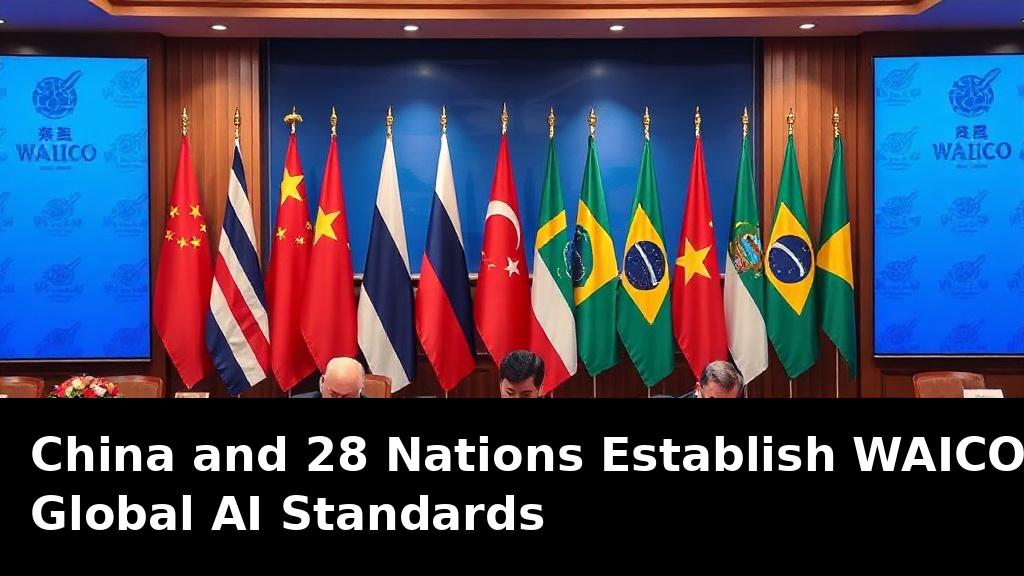
China has spearheaded the creation of the World Artificial Intelligence Cooperation Organization, bringing together 29 countries including Russia and Brazil to develop unified standards and regulatory frameworks for artificial intelligence. The formal establishment took place during a ceremony held in Shanghai on July 16, marking a significant step in international efforts to govern AI technologies.
The new body, known as WAICO, aims to introduce universal guidelines that address both the rapid advancement of AI and the disparities in technological capabilities across nations. Unlike previous global initiatives, membership is open to any sovereign state without preconditions related to political systems, allowing broader participation from developing countries.
Notable absences from the founding members include the United States, the European Union and its member states, the United Kingdom, Japan, and South Korea. These omissions highlight ongoing geopolitical divisions in the technology sector, where leading AI powers have pursued separate approaches to regulation and standards development.
Chinese technology firms have intensified efforts to position themselves as alternatives in areas such as open-weight models, cybersecurity applications of AI, and open-source platforms. This strategic push seeks to reduce reliance on dominant Western ecosystems while expanding influence in emerging markets.
One key distinction of WAICO lies in its explicit focus on narrowing the global capability divide. By prioritizing development-oriented agendas, the organization intends to support nations with limited AI infrastructure through shared resources and collaborative projects. This approach could facilitate technology transfer and capacity building in regions previously underrepresented in international AI discussions.
The timing of WAICO’s launch coincides with broader calls for structured AI governance worldwide. Industry leaders have advocated for frameworks that balance innovation with safety, often referencing models from established regulatory bodies in other sectors. The absence of major Western participants raises questions about potential fragmentation in AI standards, where parallel systems might emerge and complicate cross-border cooperation.
Another important context is the emphasis on inclusive membership criteria. By removing regime-type barriers, WAICO positions itself as a platform accessible to a wider range of governments, potentially accelerating adoption of AI policies tailored to local development needs. This could influence how future international agreements on AI ethics and deployment are negotiated.
As WAICO begins its operations, attention will turn to the practical implementation of its guidelines and the extent to which they gain traction beyond the founding members. The organization’s success may depend on its ability to demonstrate tangible benefits in bridging technological gaps while maintaining credibility among diverse stakeholders.